
Montrose is one of the first neighborhoods buyers ask about when they want to live inside the 610 Loop: close to downtown, the Museum District and the Texas Medical Center, with walkable blocks, older homes and some of Houston's best-known restaurants and arts institutions. Whether it's a good place to live depends on what kind of home you want, how you feel about change on your block, and how much you're prepared to spend. This guide covers how Montrose is defined, what homes cost, historic districts and deed restrictions, schools and taxes, the street projects underway and what to check on a specific property. Everything below was checked on November 1, 2026.
TL;DR
- The City of Houston treats Montrose as part of the Neartown / Montrose super neighborhood, roughly bounded by Allen Parkway, US 59, South Shepherd Drive and the Taft, Bagby and Main corridor, in City Council District C.
- Census estimates published by the City in January 2026 put the area's median house value at about $656,800 and median household income at about $101,900, with about 34,270 residents.
- The area holds six City-designated historic districts, where exterior changes visible from the street, new construction and demolition are reviewed by the City. Outside them, older homes are often replaced by new houses, townhomes or multifamily buildings.
- Montrose is in Houston ISD, whose 2025 tax rate is $0.8783 per $100 of taxable value. Confirm zoned schools for the exact address.
- Montrose Boulevard has been rebuilt from Allen Parkway to just south of West Clay, and a separate City project is working on Montrose from West Clay to Westheimer.
How the City defines Montrose
There's no single official line around "Montrose." The City's Neartown / Montrose super neighborhood page says the area is roughly bounded by Highway 59 to the south, Allen Parkway to the north, Taft Street, Bagby Street and Main Street to the east, and South Shepherd Drive to the west, and that it sits in City Council District C.
Inside those lines are many smaller neighborhoods with their own civic clubs. The City lists 14 of them, including Audubon Place, Avondale, Courtlandt Place, East Montrose, First Montrose Commons, Hyde Park, Lancaster Place, Mandell Place, North Montrose, Richwood Place, Vermont Commons, WAMM, Westmoreland and Winlow Place. Rules, lot sizes and housing types can differ a lot from one to the next, so a listing that just says "Montrose" tells you less than the subdivision name in the legal description.
The City describes the area as one of Houston's most eclectic, with a long history as a home for artists, musicians and Houston's LGBTQ communities, and as home to the Menil Collection, Rothko Chapel, Art League Houston, the Montrose Center and the University of St. Thomas. Parks inside the super neighborhood include Lamar Park, Live Oak Park, Mandell Park, Peggy H. Shiffick Park and the Westheimer Greenspace.
What homes cost in Montrose
The City of Houston Planning Department publishes super neighborhood profiles built from the U.S. Census Bureau's 2020-2024 American Community Survey five-year estimates, released in January 2026. The Neartown / Montrose profile shows:
- Median house value: $656,792
- Median household income: $101,930
- Total population: about 34,271
- Housing units: about 22,854, with 87 percent occupied
These are owner estimates averaged over five years, not recent sale prices, and they blend very different housing. A one-bedroom condo, a 1920s bungalow on a small lot and a new three-story townhome can sit within a few blocks of each other and sell for very different prices. For what is listed and selling now, browse current Houston listings and ask for recent sold comparables on the specific streets you're considering. Keep in mind Texas is a non-disclosure state, so sale prices aren't public records.
Old houses, new townhomes and what can change next door
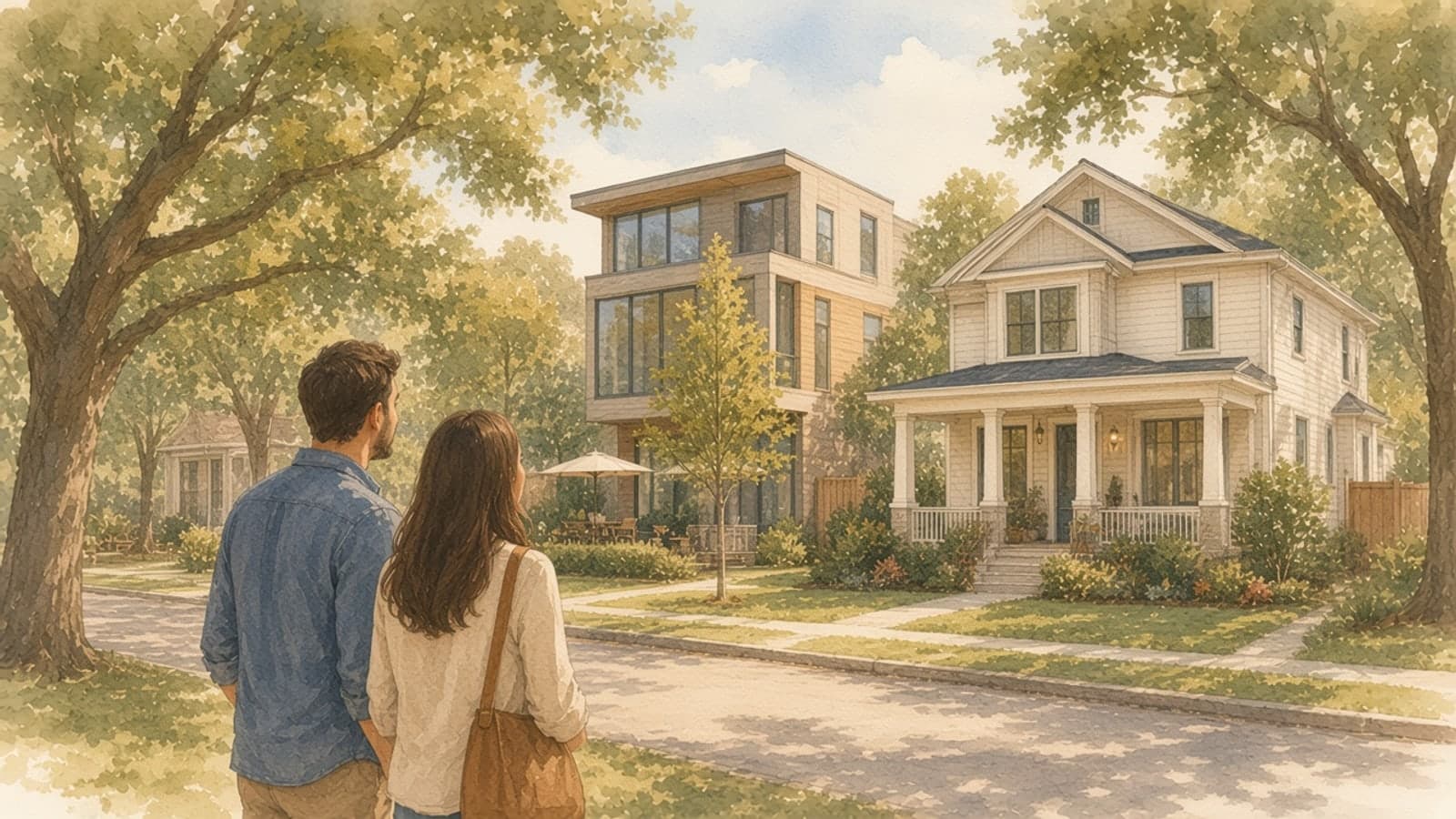
The City's super neighborhood page is direct about the pressure on Montrose: demand for housing near downtown is changing the look of the area, and in some places old homes are being torn down for high-end contemporary homes or multi-unit condominiums and apartments. It also notes that neighborhoods with deed restrictions have generally kept more of their original character, with vintage single-family homes and back yards.
Because Houston has no zoning, three things shape what can be built near a home you're considering:
- Deed restrictions. These are recorded private rules for a subdivision, such as single-family only, setbacks or minimum lot sizes. They vary by subdivision and section. Ask the title company for copies during your option period and read them before it ends.
- Minimum lot size and building line protections. Under Chapter 42 of the City code, neighborhoods with enough owner support can apply for a special minimum lot size or special minimum building line. Once approved, new lots can't be created below the minimum and new construction must sit behind the set building line, though existing smaller lots and homes can stay. The City uses a lower threshold, 60 percent of properties instead of 70 percent, in City-designated historic districts. Its online map shows whether an address is in an approved or proposed boundary.
- City historic districts, covered next.
If you'd rather have newer construction, our guide to new construction vs. resale in Houston and our townhome buying guide cover what to check on each.
Historic districts in Montrose
The City says Neartown is home to six City-designated historic districts. The City's historic district property list includes Audubon Place, Avondale East, Avondale West, Courtlandt Place, First Montrose Commons and Westmoreland, all with 77006 addresses. Each property in a district is listed as contributing or non-contributing, along with its year built, so you can look up a specific house before you make an offer.
Being in a district matters most if you plan to change the outside of the home. The Houston Office of Preservation's summary of what is regulated says exterior changes visible from the street, such as additions, replacing doors, windows or siding, or changing the roof shape or pitch, are reviewed, as are new construction and demolition. It lists exempt work too, including interior changes, alterations not visible from the street, ordinary maintenance like re-roofing with the same material, paint colors, landscaping and fences, and demolition of a non-contributing structure.
For buyers, the tradeoff is plain. A historic district limits what you can do to the front of your house, and it limits what your neighbors can do to theirs. Our guide to deed restrictions and historic districts in the Heights explains the approval process in more detail.
Schools and property taxes
Montrose is in Houston ISD. Several campuses serve the area, and zones can change, so confirm the currently zoned elementary, middle and high school for the exact address with the district before you write an offer. Our guide to choosing a Houston neighborhood for your family explains how to check school zoning.
For tax year 2025, the HISD board adopted a tax rate of $0.8783 per $100 of taxable value on October 15, 2025. KPRC reported that the increase used a one-year "disaster penny" provision tied to Hurricane Beryl costs, and that the district offers a local 20 percent homestead exemption on top of the state's. Your total bill also includes the City of Houston, Harris County and other taxing units. Our guide to Houston property taxes shows how the pieces add up, and how to read an HCAD property record shows where to find a home's current value and exemptions.
Montrose Boulevard and other street work
Expect road work. The Montrose Redevelopment Authority (TIRZ 27) has fully reconstructed Montrose Boulevard from Allen Parkway to just south of West Clay Street, about half a mile, as a four-lane concrete roadway with a median, sidewalks, trees, signals and upgraded storm drainage, at a construction cost of $17.9 million. As of November 1, 2026, the project page says construction is wrapping up, the new streetlights are progressing toward being turned on, and a pedestrian bridge is part of the project.
The same page notes a separate City of Houston Public Works project on Montrose from West Clay to Westheimer, covering resurfacing, sidewalk ramps and spot sidewalks, and storm sewer inlet upgrades. A state accessibility filing for Montrose Boulevard reconstruction from Westheimer to West Clay lists a July 20, 2026 start and a December 15, 2027 completion. If a home you like is on or near Montrose Boulevard, drive it at the times you'd actually commute.
Flooding and drainage
Flood risk in Montrose varies by street and by lot, and a house outside a mapped floodplain can still have taken water. For any home you're serious about:
- Look up the address on MAAPnext, Harris County's flood map viewer, and the FEMA Flood Map Service Center.
- Read the seller's disclosure notice for prior flooding and flood insurance claims.
- Ask whether the home has been raised, rebuilt or remodeled after water damage, and get a flood insurance quote early.
Our guide to checking a Houston home's flood zone and history walks through each step.
Who Montrose fits
Montrose tends to suit buyers who want to be inside the Loop with short drives to downtown, the Museum District and the Medical Center, who like walking to restaurants, coffee shops and galleries, and who value older architecture and mature trees. It also works for buyers who want a lock-and-leave condo or townhome close to the city's core.
It's a harder fit if you want a big yard for the money, a quiet street with no construction nearby, or an HOA that controls every exterior. Nightlife and traffic on Westheimer and the major corridors are part of daily life on some blocks, so visit at night and on a weekend before you commit.
FAQ
Is Montrose part of the City of Houston?
Yes. The City counts it as part of the Neartown / Montrose super neighborhood in City Council District C, roughly between Allen Parkway, US 59, South Shepherd Drive and the Taft, Bagby and Main corridor.
How much does a house cost in Montrose?
Census estimates published by the City in January 2026 put the median house value at about $656,800. That figure blends condos, older homes and new construction over five years, so ask for recent sold comparables on the streets you like.
What school district is Montrose in?
Houston ISD. Confirm the zoned elementary, middle and high school for the exact address with the district, since zones can change.
Are there historic districts in Montrose?
Yes. The City says Neartown has six City-designated historic districts, including Audubon Place, Avondale East, Avondale West, Courtlandt Place, First Montrose Commons and Westmoreland. Exterior changes visible from the street, new construction and demolition there are reviewed by the City.
Can I tear down or add on to a Montrose home?
It depends on where it is. Deed restrictions, minimum lot size or building line protections, and historic district rules can each limit what you can build. Check all three for the exact address before you buy a home you plan to change.
Does Montrose flood?
Some streets and homes have flooded and others haven't. Check the flood maps, the seller's disclosure and any past claims for each property, and get a flood insurance quote before your option period ends.
One last thing
Montrose is really a group of small neighborhoods with different rules, prices and street character. Pick the few that fit your budget and lifestyle, then check deed restrictions, historic district status, school zoning and flood history house by house. For more context, read Is Houston a Good Place to Buy a Home?, browse our Houston area guides, or contact Vital Realty to talk through specific Montrose homes.