
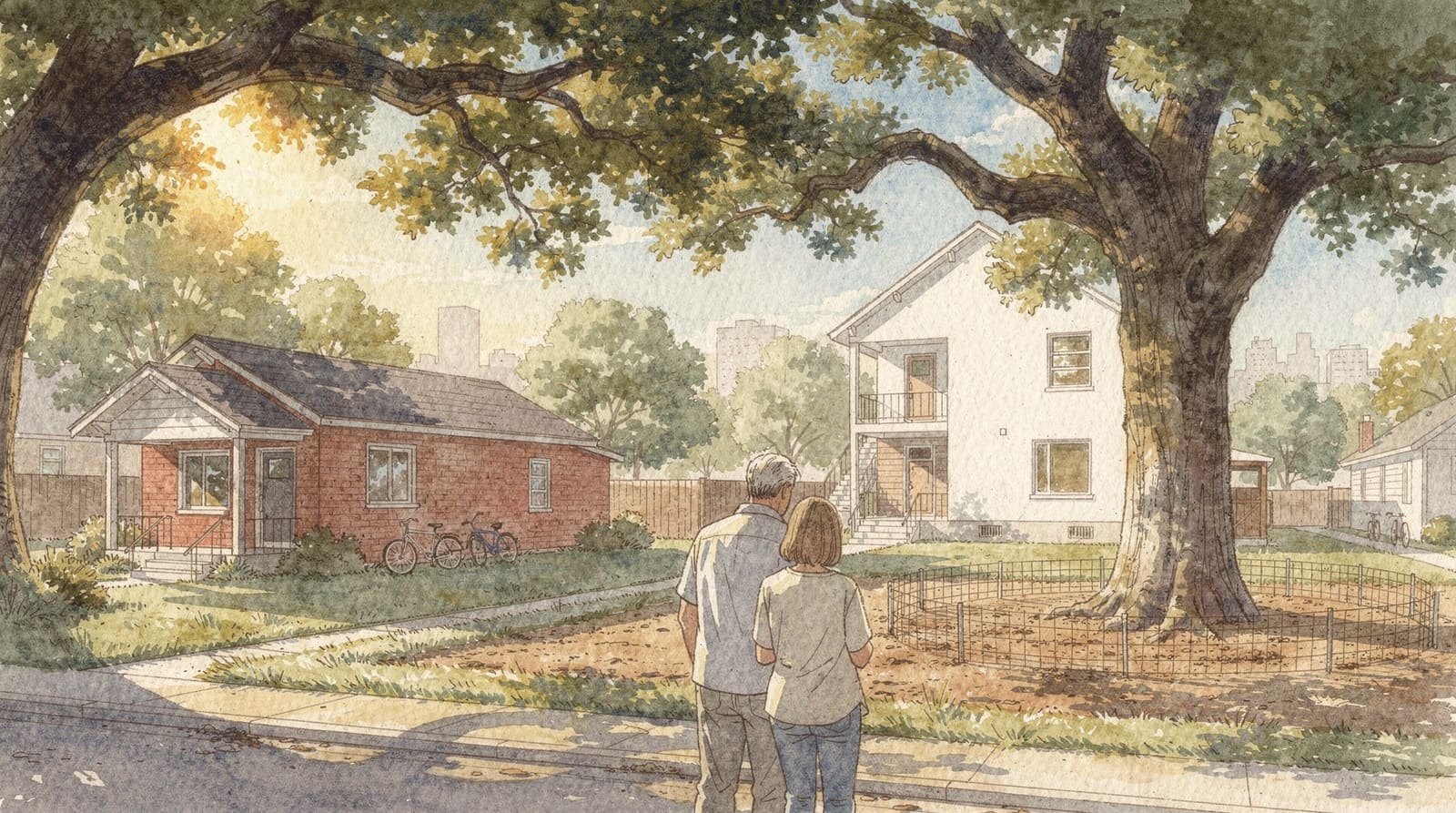
West University Place, which most people call West U, is a small, separate city of about two square miles near Rice University and the Texas Medical Center. Buyers looking there usually want to know four things: why so many original houses get torn down, what the city's building and flood rules mean for a rebuild or remodel, how property taxes work, and which schools serve the area. This guide answers those questions with the city's own rules and numbers, and lists what to check on a specific house before you make an offer. Everything below was checked on November 10, 2026.
TL;DR
- West U is its own city, not part of Houston. It was incorporated in 1924, has its own police, fire, permits and flood rules, and covers about two square miles, according to the City of West University Place.
- The city's adopted 2026 tax rate is $0.222219 per $100 of value, down from $0.229441 for 2025, per the city's FY2027 budget and tax rate page. Houston ISD's 2026 rate of $0.8421 and county rates are added on top.
- The city offers no general homestead exemption on its own tax, only a $185,000 exemption for owners who are 65 or older or disabled. The school district's homestead exemptions still apply.
- In the floodplain, new homes and substantially improved homes must be built at least two feet above the base flood elevation, and that includes the air conditioning equipment.
- A new house can be at most 35 feet tall above its base elevation, and any large tree (10 inches or more across) has to be protected during construction under an approved tree plan.
- Harris County Flood Control is rebuilding Poor Farm Ditch, the main drainage channel for West U and Southside Place, with completion scheduled for the second quarter of 2030.
What kind of place West U is
West University Place began as a land development. The city's history page says the Houston West End Realty Company put the first lots up for sale on April 1, 1917, and that early lots measured 100 by 200 feet. The name comes from the area's location next to Rice University. Residents incorporated the city in 1924 because of muddy streets and poor drainage, and in 1939 they voted against consolidating with Houston. The first city charter followed in 1940.
That history still shapes daily life. Your building permits, inspections, trash pickup, water bill and city property tax come from West U City Hall at 3800 University Boulevard, not from Houston.
The city describes itself as minutes from downtown, Rice University, the Texas Medical Center and the Galleria and Uptown areas. If you're weighing West U against other close-in neighborhoods, our Bellaire guide covers its neighbor to the southwest, our Houston area guides cover several neighborhoods inside the city of Houston, and you can browse current homes on our home search.
Rebuilding in West U: trees, permits and height
Many West U buyers plan to remodel or rebuild an older house. If that's you, the city's process sets your timeline and costs. If you plan to live in a house as it stands, expect neighbors to rebuild around you.
The tree rules come first
West U protects its large trees. The city's tree disposition page says any tree 10 inches or more in diameter, measured 4.5 feet above the ground, counts as a "large" tree and must be protected whenever development is planned. Before a pre-construction or construction permit is issued, you must submit:
- a tree survey showing every large tree on the lot and the adjacent street area, plus trees on neighboring lots if more than 30% of their critical root zone is on your site
- the proposed site plan, including drain, water and sewer lines that could affect roots
- a written plan explaining how trees will be protected, which will be removed and what replacements will be planted
During construction, tree root zones must be enclosed with a 6-foot chain link fence. Healthy trees that are removed must be replaced before the house can get its final approval. As of November 10, 2026, the tree disposition fee is $250 for large construction and pool projects and $150 for shorter remodel and demolition projects.
If you plan to rebuild, have a builder or arborist look at the trees before your option period ends.
Plan review takes weeks, not days
The city's permitting and plan review page puts typical plan review for a new home or larger remodel at 10 to 15 business days, with the Urban Forester's tree review averaging 5 to 7 business days. If plans are rejected and corrected, review starts over. Inspections are only done on Tuesdays and Thursdays. For a rebuild, the old house's demolition has to be permitted, inspected and finaled before building plans are released.
How tall a new house can be
The city's building height certification form sets the maximum height of a main house at 35 feet above its base elevation, and a detached structure in the rear yard at 25 feet. A surveyor or engineer certifies the height once framing is complete. The city amended its zoning rules in 2019 through Ordinance No. 2075 so that a flooded house in the 100-year floodplain that is raised to meet flood rules can exceed its old height by the amount it was raised, up to 39 feet overall and 27 feet in the rear yard.
Flood risk and West U's higher building standard
West U is not free of flood risk, but most of its mapped floodplain sits in one area. The city's Know Your Flood Hazard page says most of the floodplain lies next to Southside Place near Poor Farm Ditch, within the Buffalo Bayou and Brays Bayou watersheds. The city's current effective FEMA flood maps are dated June 18, 2007.
The two-foot rule
According to the city's Building Responsibly page, all development in the floodplain needs a permit, including new construction, fill, grading and paving. West U goes beyond federal minimums: new construction and substantially improved buildings must be built at least two feet above the base flood elevation, and so must the equipment that serves them, such as air conditioning units.
"Substantially improved" has a specific meaning. If repairs or improvements cost 50% or more of the building's market value, the house is held to the same standard as a new one. That's the point at which a big remodel of an older house in the floodplain can turn into raising the house or rebuilding it. The city notes that building higher can also lower flood insurance premiums, depending on how far above the base flood elevation the house sits.
Poor Farm Ditch is being rebuilt
Poor Farm Ditch drains more than 1,330 acres of West U and Southside Place to Brays Bayou. The Harris County Flood Control District says the channel was built in 1952 and has exceeded its design life. The $33 million project rebuilds about 3,100 feet of the ditch between Bellaire Boulevard and University Boulevard, widening it from 28 to 40 feet and deepening it from 7.5 to 10 feet. That raises its capacity from about a 10-year storm to a 50-year storm.
Work started in the third quarter of 2026 and is scheduled to finish in the second quarter of 2030, per the district's project update. Crews work in segments of about 500 feet, starting at Bellaire Boulevard and moving north, behind a 6-foot screened fence on both sides of the channel. If a house you like backs up to the ditch, expect construction next door for some time. The city posts monthly updates on its Poor Farm Ditch project page.
To check a specific address, look it up on FEMA's Flood Map Service Center, ask the seller for an elevation certificate, and ask whether the house has ever flooded. The city says it keeps elevation certificates on file for some floodplain properties at the Building Department, 3826 Amherst Street. Our guides to Houston flood zones by address and flood insurance costs explain the next steps.
Property taxes in West U
A West U tax bill combines several taxing units: the city, Houston ISD, Harris County and other county-wide units. Each sets its own rate.
- City of West University Place: $0.222219 per $100 of value for tax year 2026, adopted as part of the FY2027 budget. The 2025 rate was $0.229441 and the 2024 rate was $0.241930, per the city.
- Houston ISD: $0.8421 per $100 for tax year 2026, adopted October 8, 2026, per HISD.
Exemptions work differently on the city line
The city's taxes page says West U offers no general homestead exemption on its own tax. It does offer a $185,000 exemption for homeowners who are 65 or older or disabled. The school district's exemptions still apply: the Texas Comptroller says school districts must give a $140,000 homestead exemption, plus another $60,000 for owners who are 65 or older or disabled.
You apply for all of these through the Harris Central Appraisal District with Form 11.13. The city also notes that owners who are 65 or older or disabled can pay city taxes in four installments, due January 31, March 31, May 31 and July 31.
When you look at a listing, remember that the seller's tax bill may reflect exemptions you won't have. Look up the property on HCAD to see its appraised value, then apply the current rates to estimate your own bill. Our guide to reading an HCAD property record shows you how.
Schools
West U is in Houston ISD. The city's schools page lists West University Elementary, Pershing Middle School, Pin Oak Middle School and Lamar High School as schools serving West U students. Attendance zones can change and can depend on the exact address, so confirm a specific house with HISD before you rely on what a listing says.
What to check before you make an offer
- Ask for the seller's disclosure and any elevation certificate, and ask whether the house has flooded or had flood insurance claims. Our Texas seller's disclosure guide explains what sellers must tell you.
- Check whether the lot is in the mapped floodplain. If it is, any remodel at or above 50% of the house's value will trigger the two-foot elevation rule.
- Walk the lot for large trees and note where they sit relative to where you'd want a new house, pool or addition.
- If you plan to rebuild, budget time for demolition, tree review and plan review before construction can start.
- Note whether the house backs up to Poor Farm Ditch, where construction runs through 2030.
- Estimate taxes with today's rates and your own exemptions, not the seller's current bill.
FAQ
Is West University Place part of the City of Houston?
No. It's a separate city that incorporated in 1924 and voted not to consolidate with Houston in 1939. It has its own council, police, fire department, permits and city tax.
What is the West U city property tax rate for 2026?
The city adopted $0.222219 per $100 of value for tax year 2026. Houston ISD, Harris County and other units add their own rates on the same bill.
Does West U have a homestead exemption?
Not a general one on the city's tax. The city offers a $185,000 exemption for owners who are 65 or older or disabled. The school district's required homestead exemptions still apply to your Houston ISD taxes.
How high does a new house in the West U floodplain have to be built?
At least two feet above the base flood elevation, including equipment like air conditioning units. Houses that are substantially improved, where work costs 50% or more of market value, must meet the same rule.
Can I cut down a tree to build in West U?
Large trees, 10 inches or more in diameter, are protected during development. You submit a tree survey and protection plan to the Urban Forester before permits are issued, and healthy trees that are removed must be replaced before the house gets final approval.
When will the Poor Farm Ditch project be finished?
Harris County Flood Control's schedule shows completion in the second quarter of 2030. Construction started in the third quarter of 2026.
One last thing
In West U, the house is often only part of what you're paying for. The lot, its trees, its flood zone and how much the city will let you build on it all affect what a property is worth to you and to the next buyer. Check those before you commit. If you'd like help weighing a specific West U house or lot, contact us.